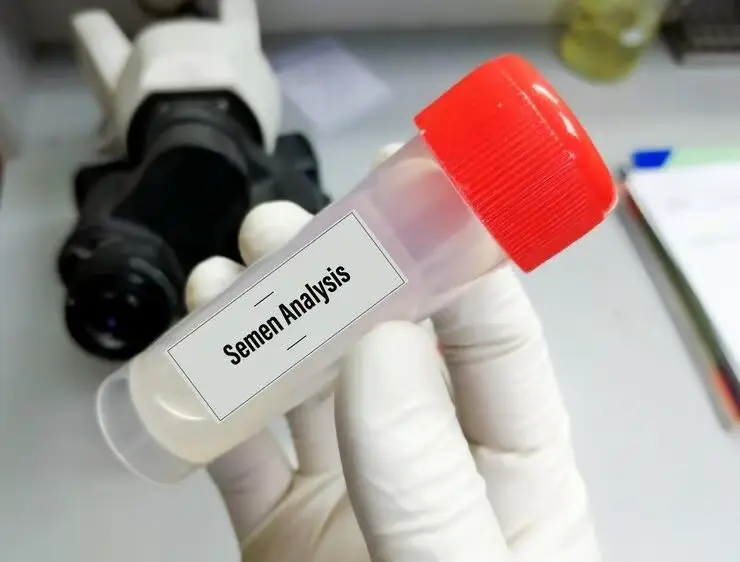
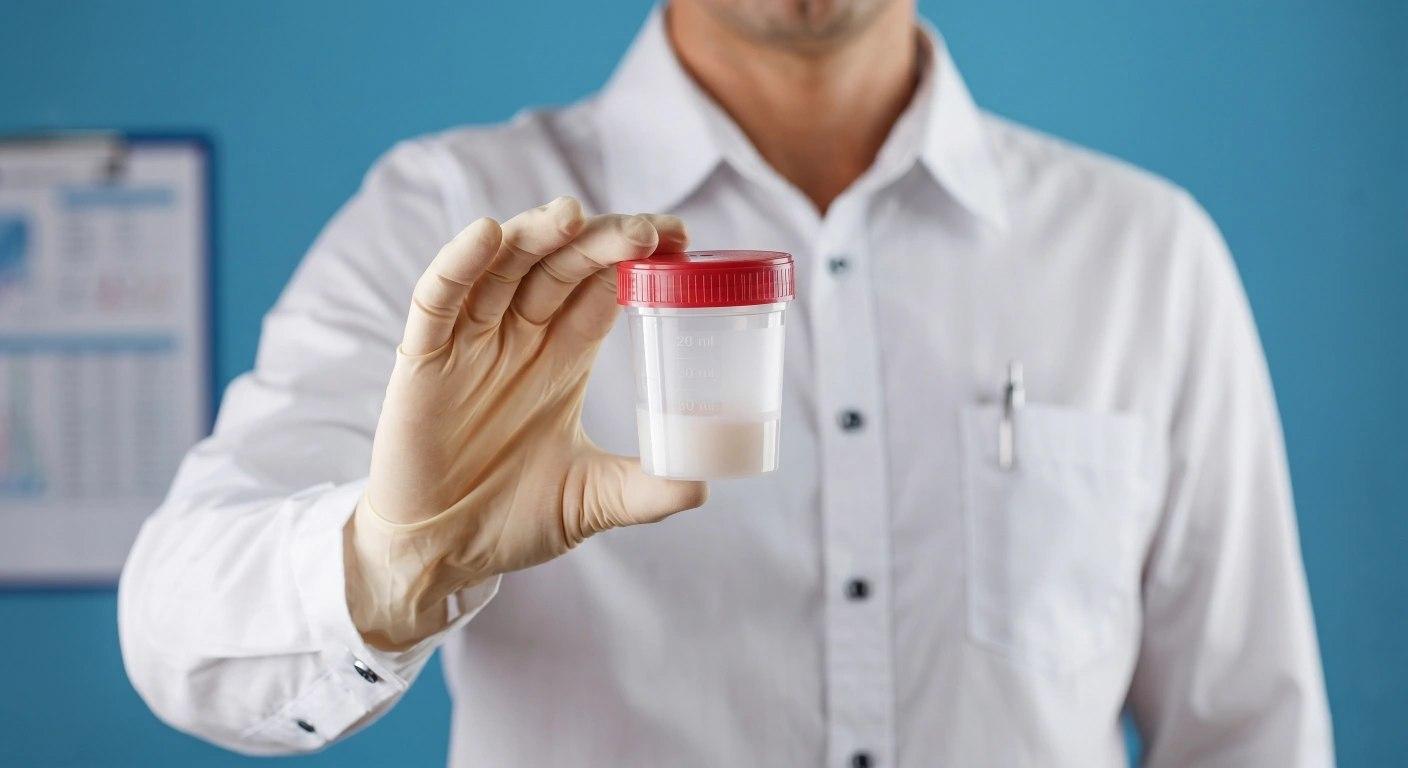
Being asked for a semen analysis leaves most men with more questions than answers. How many days should you abstain? Can you collect at home? What happens if part of the sample spills or the container sits in the car for an hour?
Those details decide the result. A semen analysis measures volume, sperm count, motility and morphology, and each of those numbers moves depending on how the sample was produced and handled. A man with normal fertility can walk away with a worrying report purely because the collection went wrong.
This guide covers how to give a sample for advanced semen analysis properly, so the report reflects your body rather than a collection error.
Before You Give a Sample for Semen Analysis
Preparation starts a few days ahead, not on the morning of the test.
- Abstain from ejaculation for 2 to 5 days. Under two days lowers volume and count. Beyond five days, motility begins to fall.
- Avoid alcohol for 48 hours before collection.
- Skip hot tubs, saunas and long steam sessions in the week before. Heat suppresses sperm production.
- Postpone the test if you have had a fever in the past two to three months, or finish the illness first and test after recovery. Sperm take roughly two and a half months to mature, so a recent fever still shows up in today’s sample.
- Tell the lab about any antibiotics, steroids or hormone treatment you are on.
- Use only the sterile container supplied by the laboratory. Household bottles, plastic pouches and food containers carry residues that kill sperm on contact.
How to Give a Sample for Semen Analysis: Step by Step
- Empty your bladder, then wash your hands and genitals with plain water and dry them fully. Soap residue is toxic to sperm.
- Collect the sample by masturbation only. No lubricants, oils, lotions, creams or saliva, since all of them affect motility.
- Catch the entire ejaculate, from the first drop to the last, directly in the container.
- Close the lid tightly and write your name and the exact time of collection on the label.
- Hand it in with the requisition form or the referring doctor’s prescription.
The first fraction of the ejaculate carries most of the sperm. If that part misses the container, the count is wrong before the sample ever reaches the microscope.
Two methods are not acceptable: withdrawal during intercourse and ordinary condoms. If religious or personal reasons rule out masturbation, ask the lab for a special non-spermicidal collection condom instead of improvising.
Getting the Sample to the Lab on Time
Sperm start losing motility once the sample leaves the body, which is why collecting on site is the safer option. Most diagnostic centres, including our pathology and diagnostic services, keep a private collection room next to the laboratory for exactly this reason.
If you collect at home, follow three rules:
- Deliver the sample within 30 to 60 minutes of collection.
- Keep it close to body temperature. An inner shirt pocket works. Never refrigerate it and never place it near an air conditioner vent.
- Do not shake or invert the container repeatedly during transport.
Anything that takes longer than an hour is worth repeating on another day rather than submitting and hoping.
Mistakes That Skew the Report
The technicians see the same handful of avoidable problems again and again:
- Partial samples where the first spurt was lost.
- Collection after only a few hours of abstinence, usually because the appointment was arranged in a hurry.
- Samples were carried across town in a cold car.
- Unlabelled containers with no collection time written on them.
- A single test treated as a final verdict.
That last one deserves attention. Sperm parameters swing week to week in the same man, so one below-range report is a signal to retest, not a diagnosis.
What Happens After You Hand It Over
The sample sits for liquefaction, then goes under the microscope, usually within an hour of collection. The technician records volume, concentration, total count, motility grades, morphology, pH and white cell presence. Results are typically ready the same day or the next.
Your treating doctor reads that report alongside your history and examination. If anything reads low, the standard next step is a repeat analysis after two to three weeks, since two samples give a far more reliable picture than one.
Knowing how to give sample for semen analysis correctly removes the biggest variable from the process. The rest is straightforward, private and quicker than most people expect.
Ready to book, or want to check what to bring? Get in touch with our team, and we will walk you through it.