

Infertility affects nearly one in every six couples worldwide, and male factors contribute to approximately 40–50% of infertility cases. Among these, azoospermia is one of the most challenging yet treatable conditions.
Azoospermia is the complete absence of sperm in the ejaculate. While it is diagnosed in about 1% of all men, it accounts for 10–15% of infertile men. In India, increasing awareness, advanced diagnostic techniques, and modern reproductive technologies have significantly improved the chances of biological fatherhood for men diagnosed with azoospermia.
This article aims to provide a comprehensive overview of azoospermia, its causes, diagnosis, available treatment options in India, and the importance of proper laboratory evaluation.
What is Azoospermia?
Azoospermia is diagnosed when no sperm are detected in semen after centrifugation and microscopic examination of at least two separate semen samples.
It should not be confused with:
- Low sperm count (oligozoospermia)
- Poor sperm motility (asthenozoospermia)
- Abnormal sperm morphology (teratozoospermia)
In azoospermia, sperm are completely absent from the ejaculate.
Types of Azoospermia
1. Obstructive Azoospermia (OA)
In obstructive azoospermia, the testes produce sperm normally, but a blockage prevents sperm from reaching the semen.
Common causes
- Previous vasectomy
- Congenital absence of the vas deferens
- Epididymal obstruction
- Infection (especially tuberculosis in India)
- Trauma
- Surgical complications
Men with obstructive azoospermia generally have:
- Normal testosterone
- Normal FSH
- Normal-sized testes
- Good sperm production
These patients usually have an excellent prognosis.
2. Non-Obstructive Azoospermia (NOA)
Here, the problem lies in reduced or absent sperm production by the testes.
Causes include:
- Genetic disorders
- Hormonal deficiencies
- Previous chemotherapy
- Radiation therapy
- Undescended testes
- Testicular failure
- Varicocele (selected cases)
- Unknown (idiopathic)
Non-obstructive azoospermia is generally more challenging but is no longer considered untreatable.
Causes of Azoospermia in India
Several factors contribute to azoospermia among Indian men.
Genetic causes
- Klinefelter syndrome
- Y chromosome microdeletion
- CFTR mutations
- Chromosomal abnormalities
Hormonal disorders
- Hypogonadotropic hypogonadism
- Pituitary disorders
- Hyperprolactinemia
- Thyroid disease
Lifestyle factors
- Smoking
- Alcohol
- Obesity
- Diabetes
- Chronic stress
- Environmental pollution
Occupational exposure
Increasing industrialization exposes men to:
- Heavy metals
- Pesticides
- Organic solvents
- Heat
- Radiation
Symptoms
Most men experience:
- Normal sexual function
- Normal erections
- Normal ejaculation
Usually, infertility is the first symptom.
Some patients may have:
- Small testes
- Reduced facial hair
- Low libido
- Erectile dysfunction (hormonal causes)
Diagnosis
Proper evaluation requires more than a single semen analysis.
Step 1: Detailed Medical History
The clinician evaluates:
- Duration of infertility
- Childhood illnesses
- Surgery
- Mumps orchitis
- Medications
- Occupational exposure
- Family history
Step 2: Physical Examination
Assessment includes:
- Testicular size
- Vas deferens
- Epididymis
- Varicocele
- Secondary sexual characteristics
Step 3: Semen Analysis
A properly collected semen sample remains the cornerstone of diagnosis.
Important observations include:
- Volume
- pH
- Fructose
- Liquefaction
- Viscosity
- White blood cells
- Centrifuged pellet examination
The sample should ideally be repeated after 2–3 weeks for confirmation.
Step 4: Hormonal Profile
Important tests include:
- FSH
- LH
- Testosterone
- Prolactin
- Estradiol
- TSH
Elevated FSH often indicates impaired sperm production.
Step 5: Ultrasound
Scrotal ultrasound evaluates:
- Testicular volume
- Varicocele
- Epididymis
Transrectal ultrasound (TRUS) is useful when ejaculatory duct obstruction is suspected.
Step 6: Genetic Testing
Recommended especially in non-obstructive azoospermia.
Tests include:
- Karyotyping
- Y chromosome microdeletion
- CFTR mutation analysis
Step 7: Testicular Sperm Retrieval
Even when no sperm are present in semen, sperm may still be present inside the testes.
Procedures include:
- PESA
- TESA
- TESE
- Micro-TESE
Micro-TESE has significantly improved sperm retrieval rates in carefully selected patients with non-obstructive azoospermia.
Treatment Options in India
Treatment depends entirely on the underlying cause.
Hormonal therapy
Useful for:
- Hypogonadotropic hypogonadism
- Selected endocrine disorders
Medications may include:
- hCG
- FSH
- GnRH therapy
Surgical treatment
Possible procedures include:
- Vasovasostomy
- Vasoepididymostomy
- Ejaculatory duct surgery
- Varicocele repair (selected patients)
Sperm Retrieval with IVF-ICSI
When sperm cannot be found in semen, they may be retrieved surgically. The retrieved sperm are injected directly into the egg using Intracytoplasmic Sperm Injection (ICSI).
This technique has revolutionized fertility treatment and allows many men with azoospermia to father biological children.
Donor Sperm
When sperm retrieval is unsuccessful, donor sperm may be considered after thorough counselling.
Success Rates
Success depends on the underlying diagnosis.
Approximate outcomes include:
- Obstructive azoospermia: Surgical sperm retrieval success often exceeds 90%.
- Non-obstructive azoospermia: Micro-TESE retrieves sperm in approximately 40–60% of carefully selected patients.
- ICSI pregnancy rates depend largely on maternal age, embryo quality, and the fertility center’s expertise.
Importance of Accurate Laboratory Evaluation
The diagnosis of azoospermia should never be made based on a single, routine semen examination.
A quality laboratory should:
- Follow current WHO semen analysis recommendations.
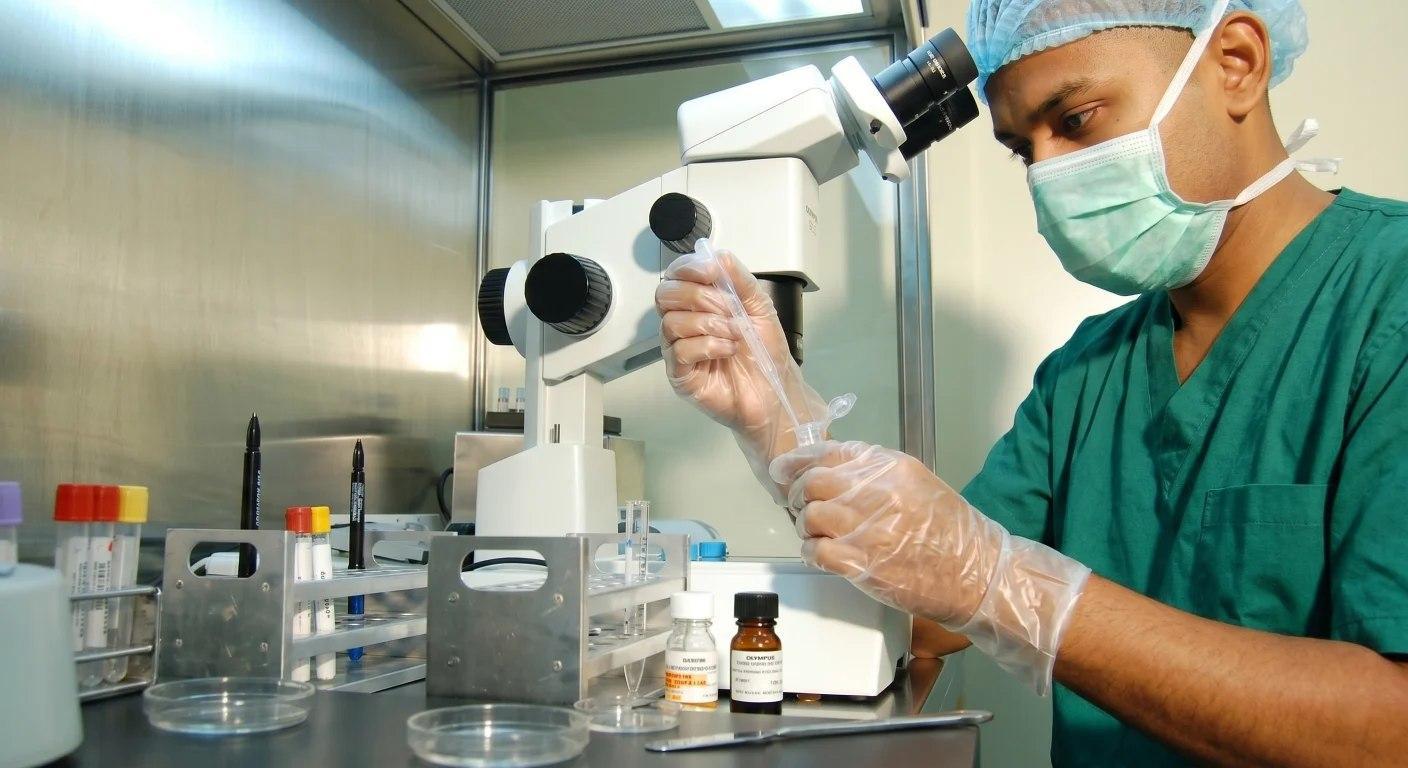
- Perform proper centrifugation before declaring azoospermia.
- Examine the pellet thoroughly under microscopy.
- Maintain strict quality control.
- Ensure trained personnel interpret results.
An incorrect diagnosis can lead to unnecessary anxiety or inappropriate treatment.
Psychological Impact
Male infertility often carries emotional and social stigma in India.
Men diagnosed with azoospermia may experience:
- Anxiety
- Depression
- Reduced self-esteem
- Relationship stress
Professional counselling and family support are essential components of treatment.
Prevention
While not all cases are preventable, the following measures may help preserve fertility:
- Maintain a healthy weight.
- Avoid smoking and excessive alcohol.
- Manage diabetes and hypertension.
- Avoid unnecessary heat exposure.
- Use protective equipment when handling industrial chemicals.
- Seek early treatment for genital infections.
- Avoid anabolic steroid misuse.
Future Directions
Emerging research offers hope for men with severe infertility.
Areas under investigation include:
- Stem cell therapy
- Gene editing
- Artificial gamete production
- Advanced sperm selection techniques
- Fertility preservation before cancer treatment
Although many of these approaches remain experimental, they may expand treatment possibilities in the future.
Conclusion
A diagnosis of azoospermia is no longer the end of the road for couples wishing to conceive. Advances in reproductive medicine, microsurgical sperm retrieval, genetic testing, and assisted reproductive technologies have transformed the outlook for affected men.
The key to successful management is accurate diagnosis, comprehensive evaluation, and individualized treatment by an experienced multidisciplinary team that includes an andrologist, fertility specialist, and quality-focused laboratory.
With timely intervention and appropriate care, many men with azoospermia can still achieve biological fatherhood, making hope a realistic possibility rather than an exception.

Book a Semen Analysis at Sun Diagnostics
See what the test covers, how to prepare and how to book on our semen analysis in Navi Mumbai page, or call us to book.


