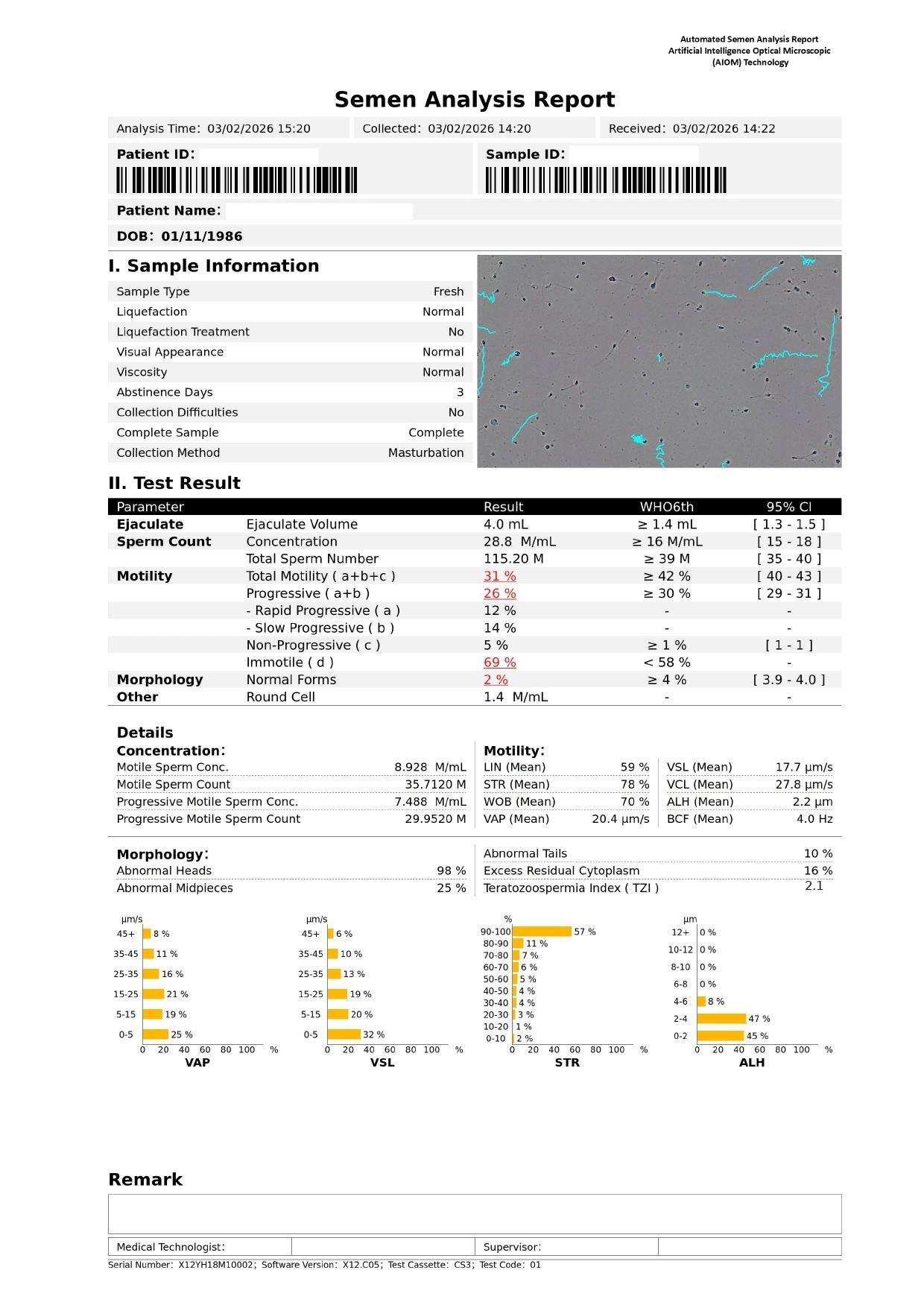

Male fertility evaluation begins with one of the most important laboratory investigations, the semen analysis test. While many laboratories still depend on conventional manual microscopy methods, modern fertility diagnostics are rapidly shifting toward Computer Assisted Semen Analysis (CASA) systems powered by advanced imaging and artificial intelligence (AI).
At Sun Diagnostics, Navi Mumbai, we use advanced AI-backed CASA technology for semen analysis, enabling highly standardised evaluation of sperm count, motility, and morphology according to the latest WHO 6th Edition guidelines. This approach improves accuracy, reproducibility, and clinical confidence for couples planning pregnancy or undergoing infertility treatment.
What is Manual Semen Analysis?
Traditional semen analysis is performed manually under a microscope by a laboratory technician or embryologist. The observer evaluates:
- Sperm concentration (count)
- Motility (movement)
- Morphology (shape and structure)
- Vitality
- Presence of pus cells or debris
Although manual microscopy has been used for decades, it is highly dependent on:
- Technician expertise
- Observer interpretation
- Visual estimation
- Sample handling variability
Studies have shown that manual semen analysis can exhibit significant inter-observer and intra-observer variability, especially in assessing morphology and motility.
What is CASA (Computer Assisted Semen Analysis)?
Computer Assisted Semen Analysis (CASA) uses:
- High-resolution digital microscopy
- AI-powered image recognition
- Automated sperm tracking software
- Motion analysis algorithms
The system evaluates thousands of sperm cells objectively within seconds, reducing subjectivity associated with manual counting.
Modern CASA platforms can analyse:
- Total sperm concentration
- Progressive motility
- Non-progressive motility
- Immotile sperm percentage
- Detailed morphology
- Velocity parameters
- Sperm trajectory and kinetics
CASA technology is increasingly being adopted by advanced fertility laboratories worldwide because of its ability to improve standardisation and reproducibility.
Manual Semen Analysis vs CASA: Scientific Comparison
| Parameter | Manual Method | CASA Technology |
|---|---|---|
| Observer dependency | High | Minimal |
| Subjectivity | Significant | Reduced |
| Reproducibility | Variable | High |
| Sperm tracking | Limited | Automated real-time tracking |
| Morphology evaluation | Human interpretation | AI-assisted digital analysis |
| Speed of analysis | Slower | Faster |
| Data storage | Limited | Digital archival possible |
| Standardization | Technician dependent | Protocol-based |
| Motion analysis | Approximate | Precise kinetic measurements |
| WHO 6 compliance | Possible | Highly standardized |
Why Manual Counting Can Be Less Reliable
Manual semen analysis faces several scientific limitations:
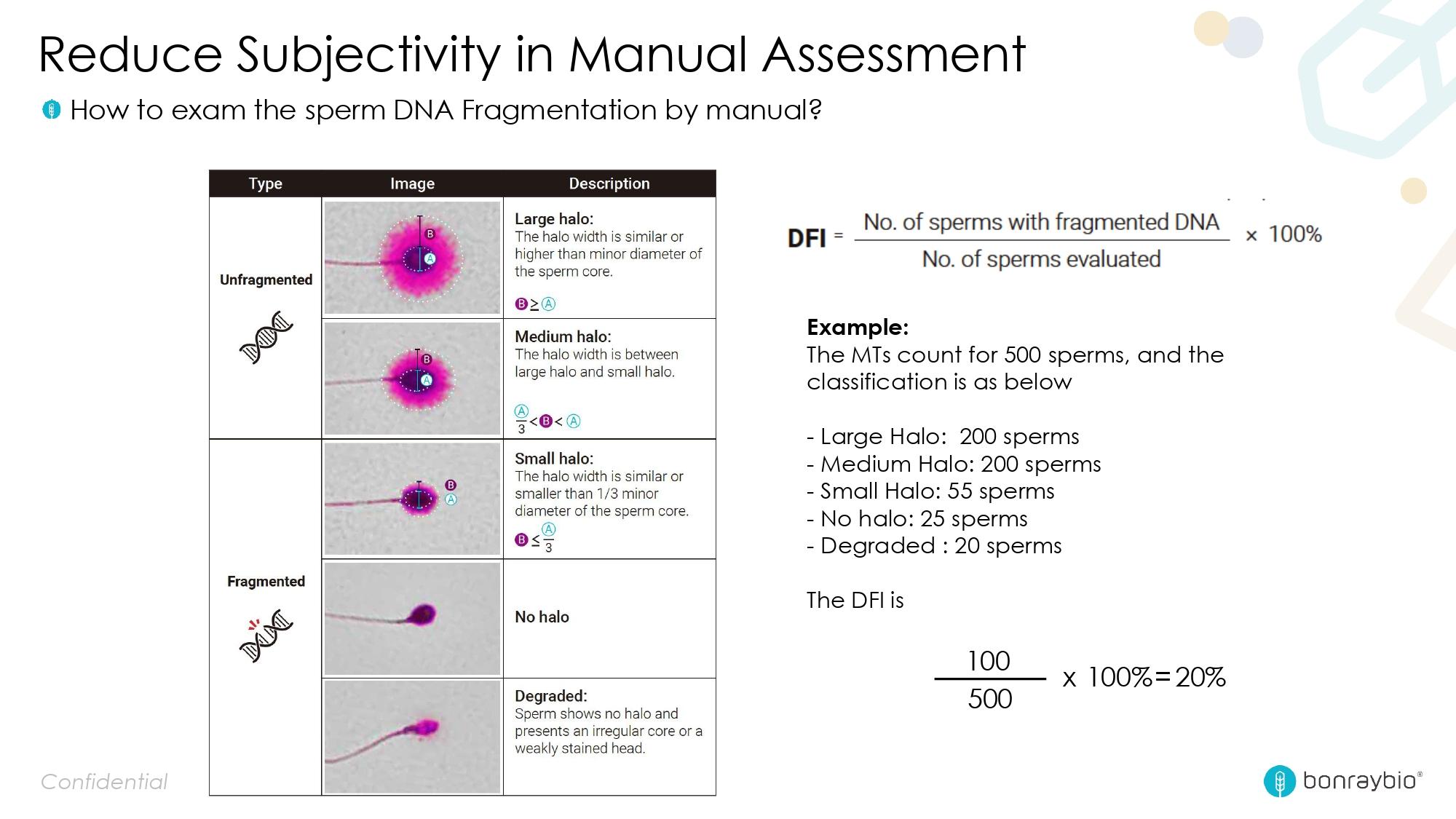
1. Observer Variability
Different technicians may report different results from the same sample. Morphology assessment especially shows wide variability between observers.
Research has reported morphology concordance rates between observers as low as 40–60%.
2. Fatigue and Human Error
Manual sperm counting and motility assessment require prolonged microscopic observation. Fatigue can affect:
- Accuracy
- Counting precision
- Motility interpretation
3. Limited Sample Evaluation
Human observers typically assess only a relatively small number of sperm cells manually, whereas CASA systems can evaluate much larger sperm populations rapidly.
4. Subjective Morphology Interpretation
Morphology assessment using strict WHO criteria is technically challenging manually. Minor differences in head shape, midpiece defects, and tail abnormalities may be interpreted differently by different observers.
Scientific Advantages of CASA Technology
1. Objective and Standardised Analysis
CASA systems reduce human subjectivity using automated image processing and predefined algorithms.
2. Advanced Motility Assessment
Unlike manual estimation, CASA evaluates:
- Curvilinear velocity
- Straight-line velocity
- Average path velocity
- Beat-cross frequency
- Lateral head displacement
These parameters provide deeper insights into sperm functionality.
3. AI-Based Morphology Evaluation
Modern AI-assisted systems identify:
- Head defects
- Neck abnormalities
- Tail abnormalities
- Cytoplasmic droplets
This improves consistency compared to purely visual interpretation.
4. Better Reproducibility
Automated systems maintain consistent analytical settings across samples, improving laboratory reproducibility and quality control.
5. WHO 6th Edition Compliance
The WHO 6th Edition emphasises standardisation and quality assurance in semen analysis. CASA-based systems support these objectives effectively.
WHO 6th Edition and Modern Fertility Testing
The WHO Laboratory Manual for the Examination and Processing of Human Semen, 6th Edition (2021) introduced updated recommendations focusing on:
- Improved standardization
- Evidence-based reporting
- Better quality assurance
- Advanced semen evaluation parameters
WHO Semen Manual 6th Edition
At Sun Diagnostics, semen analysis reporting follows the WHO 6 guidelines for:
- Concentration
- Total motility
- Progressive motility
- Morphology
- Vitality
- Sample interpretation
AI-Backed Semen Analysis at Sun Diagnostics, Navi Mumbai
At Sun Diagnostics, we use advanced AI-backed CASA technology to provide:
- Accurate sperm counting
- Detailed motility analysis
- AI-supported morphology evaluation
- Standardized reporting
- WHO 6 guideline-based interpretation
Our advanced fertility diagnostics help reduce analytical variability and provide clinicians with more reliable data for:
- Infertility evaluation
- IVF planning
- IUI assessment
- Male fertility screening
- Follow-up fertility monitoring
Why Advanced Semen Analysis Matters
Male factors contribute to nearly 40–50% of infertility cases globally.
Even small inaccuracies in semen analysis can affect:
- Fertility treatment decisions
- IVF/ICSI planning
- Clinical interpretation
- Reproductive outcomes
Using modern AI-assisted CASA systems helps improve diagnostic confidence and supports evidence-based fertility management.
Who Should Consider Advanced CASA-Based Semen Analysis?
Advanced semen analysis is especially useful for:
- Couples trying to conceive
- Recurrent IVF failure
- Low sperm motility cases
- Abnormal morphology reports
- Varicocele evaluation
- Fertility treatment planning
- Follow-up after lifestyle or medical treatment
Best Semen Analysis Laboratory in Navi Mumbai
If you are looking for:
- Advanced semen analysis in Navi Mumbai
- AI-based sperm morphology testing
- WHO 6 guideline semen analysis
- CASA semen analysis near Seawoods
- Male fertility testing in Navi Mumbai
Sun Diagnostics offers advanced fertility diagnostics with modern automated semen analysis technology designed for precision and reliability.